
Central ParkLower loop
1 hour
1hr Central Park Guided Tour by Pedicab
A focused lower-loop introduction for up to three people, including children.
Covers the lower-loop highlights.
Adult starting price$55
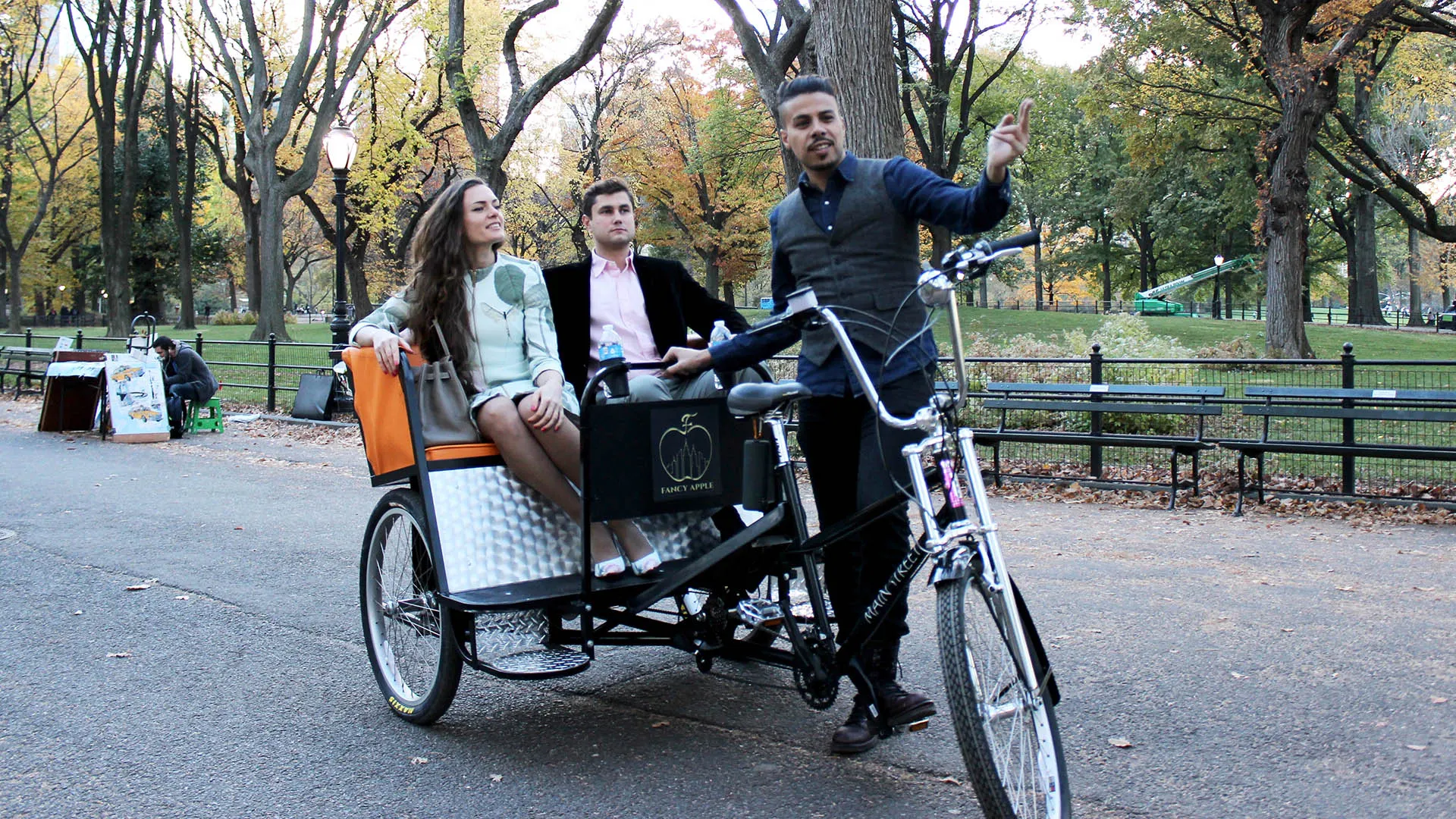
Sit back · see more of the park
Choose one hour for lower-loop highlights, two for broader coverage, or three for the full unhurried route.
From$55
Secure checkout · Instant confirmation
Site & booking help in 5 languages★ 4.8 · 3,500+ Google1, 2 & 3-hour routesFree cancellation
Choose by coverage
Use the glyphs to compare approximate route breadth; exact stops are confirmed during booking.
Street pedicabs in the park charge by the meter — commonly $3–5 per minute, negotiated on the spot. Here the price is fixed per guest, booked ahead, with a licensed guide.
1 hour
A focused lower-loop introduction for up to three people, including children.
Covers the lower-loop highlights.
Adult starting price$55
2 hours
More time on the guide-led park route than the one-hour highlights option.
Covers most of the full source list.
Adult price vs 1 hour+$40
3 hours
Our most complete pedicab route, with time to enjoy the park.
Covers all 35 park highlights.
Adult price vs 2 hours+$100
Adult price vs 1 hour+$140
The Park Guide
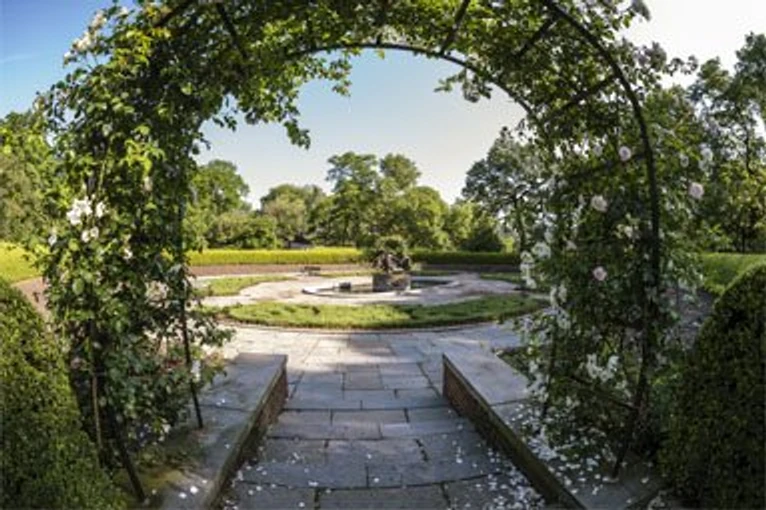
Story 1 of 18
One of Central Park’s quieter wonders, Conservatory Gardens brings three European traditions into six acres: French, Italian and English. Flowers, fountains and clipped hedges give each garden its own character, while the formal paths make this a favorite for weddings and photographs. It is a composed, colorful pause at the park’s northern end.
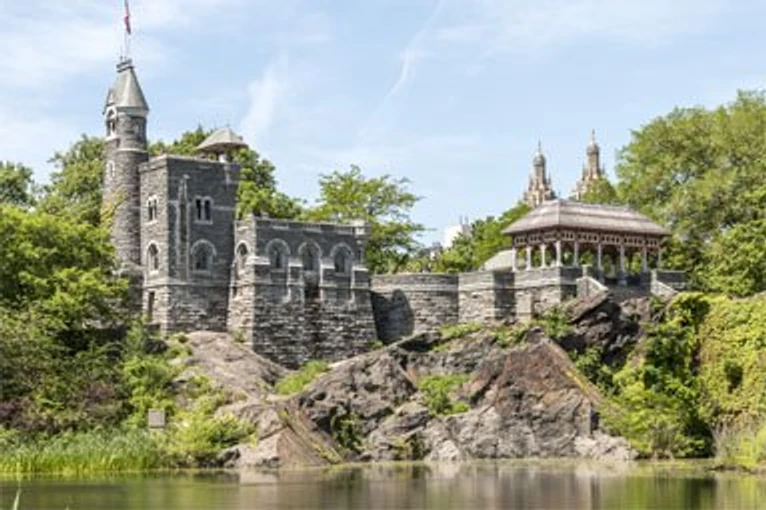
Story 2 of 18
Designed in 1865, Belvedere Castle was created to bring fantasy and adventure into the heart of Central Park. Its name means “beautiful view” in Italian, and two balconies plus a small promenade still deliver on that promise. The stone lookout turns a park crossing into a theatrical moment, with broad views that feel unexpectedly removed from Manhattan.
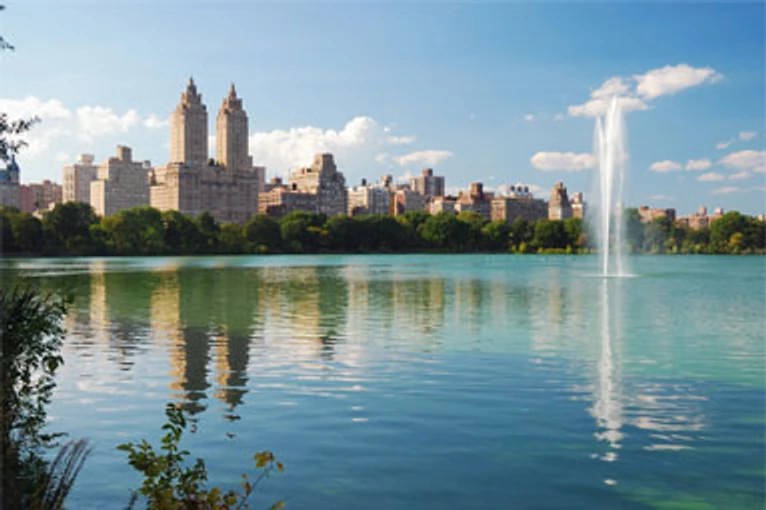
Story 3 of 18
A feat of engineering as well as a defining landscape, the Jacqueline Kennedy Onassis Reservoir holds about a billion gallons of water. Built in the 1860s as a temporary city water supply, it now frames one of New York’s best-known running routes. The broad water and skyline views make the park feel dramatically larger and more open.
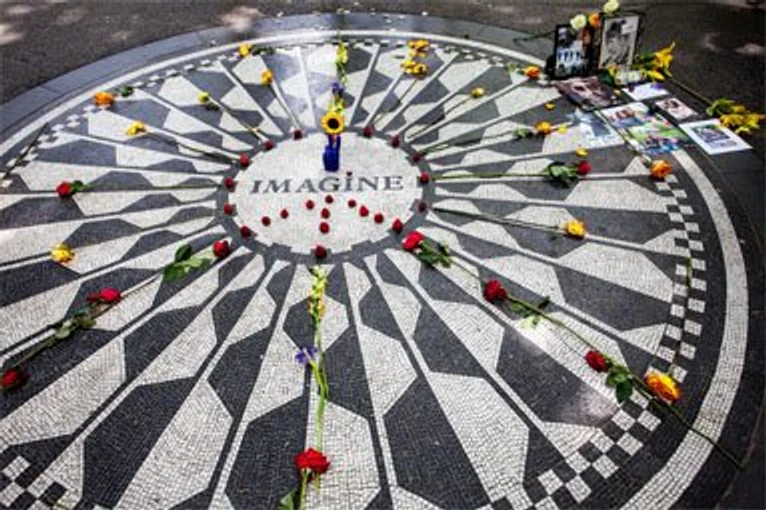
Story 4 of 18
Strawberry Fields is a living memorial to singer, songwriter and peace activist John Lennon. The site sits across from the Dakota, where Lennon lived and outside which he was killed. At its center, the black-and-white “Imagine” mosaic has become a quiet gathering point for music, remembrance and messages of peace from visitors around the world.
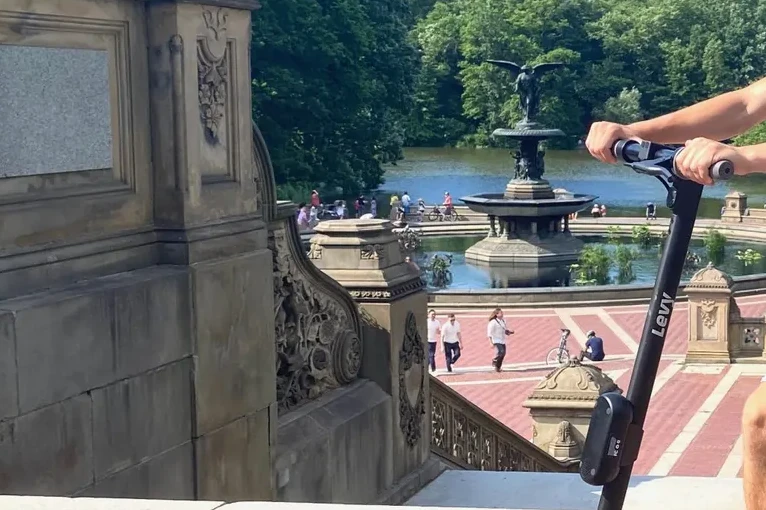
Story 5 of 18
Bethesda Fountain carries a story about water and public health. After a deadly 1832 cholera epidemic, the Croton Aqueduct brought clean water to New York in 1842. Unveiled in 1873, the fountain honors that healing power. Its Angel of the Waters is the only sculpture commissioned as part of the original Central Park design, making the terrace both beautiful and deeply civic.
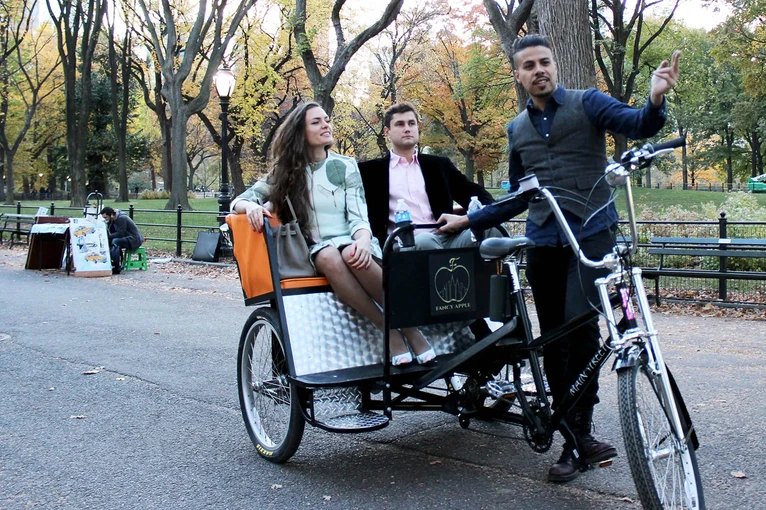
Story 6 of 18
The Mall was designed as Central Park’s grand promenade, where New Yorkers once walked in their Sunday best. Today it is equally famous for one of the country’s largest surviving stands of American elms. Four rows of mature trees meet overhead to form a cathedral-like canopy, turning a straight path into one of the park’s most photographed scenes.
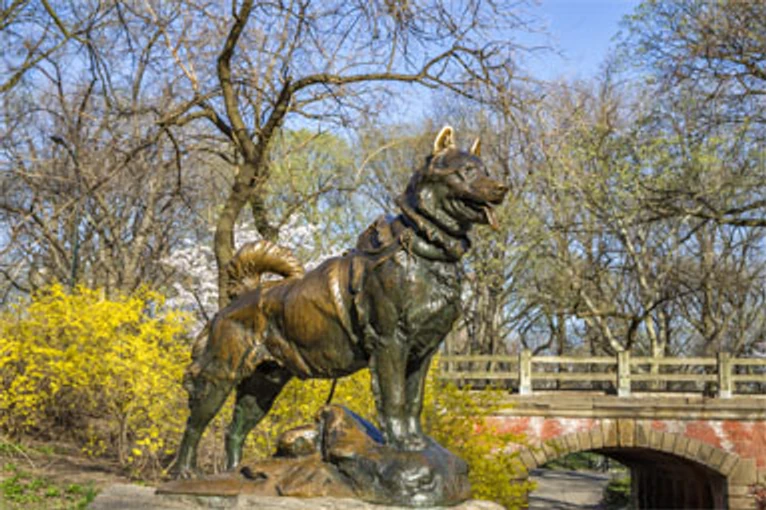
Story 7 of 18
In 1925, a diphtheria outbreak threatened Nome, Alaska. Balto helped lead the final leg of a dog-sled relay that carried lifesaving antitoxin across hundreds of miles of ice, water and blizzard conditions. The Central Park statue honors that endurance. Generations of children have climbed onto the bronze dog, polishing parts of the sculpture with their hands.
Story 8 of 18
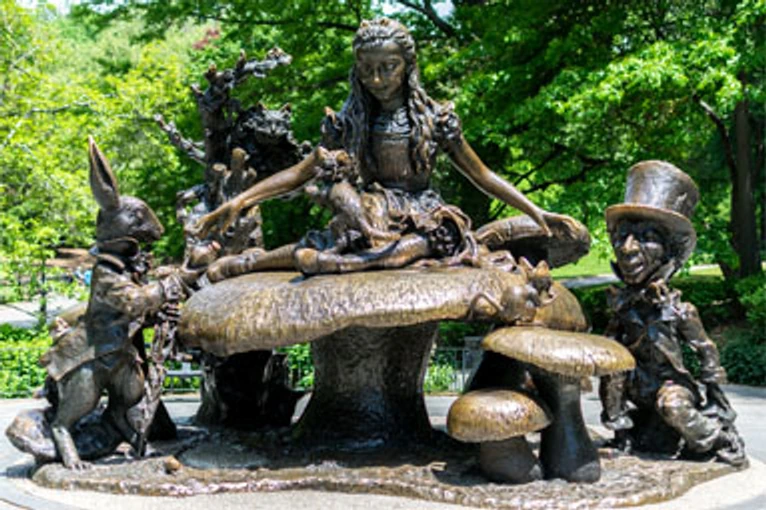
In 1959, publisher and philanthropist George Delacorte commissioned Alice in Wonderland as a gift to New York’s children and in memory of his wife, who read the story to their family. The sculpture was made to be touched. Children still climb among Alice, the Mad Hatter, the White Rabbit and the Dormouse rather than viewing them from a distance.
Story 9 of 18
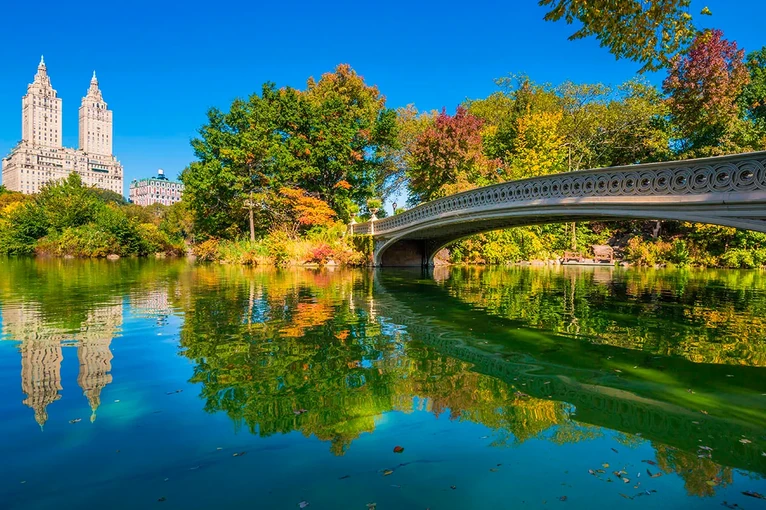
Named for its graceful archer’s-bow curve, Bow Bridge was built in 1862. It is Central Park’s oldest cast-iron bridge and one of its most romantic crossings. The water, skyline glimpses and ornamental railings have made it a natural film location, appearing in movies including Manhattan, The Way We Were and Keeping the Faith.
Story 10 of 18
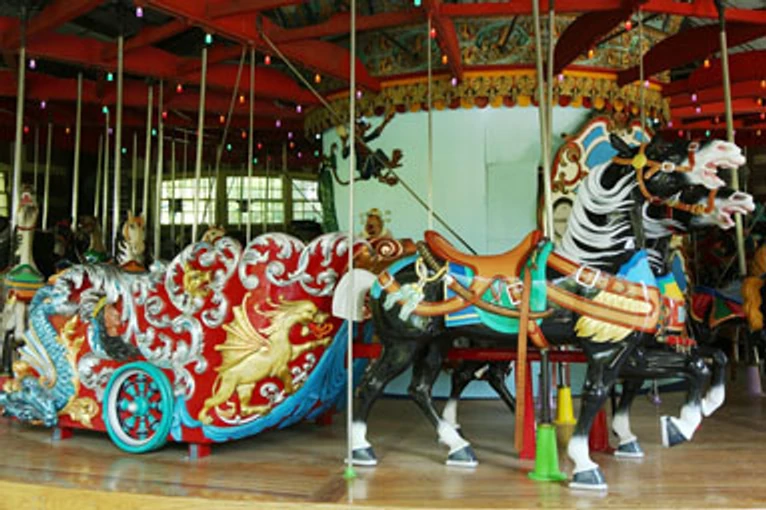
A carousel has been part of Central Park life since 1871. Three earlier versions were destroyed by fire, yet New Yorkers kept bringing the ride back. Today’s Carousel is more than a century old, one of the largest in the United States and home to 57 hand-carved horses. It still carries generations of families through the same joyful circle.
Story 11 of 18
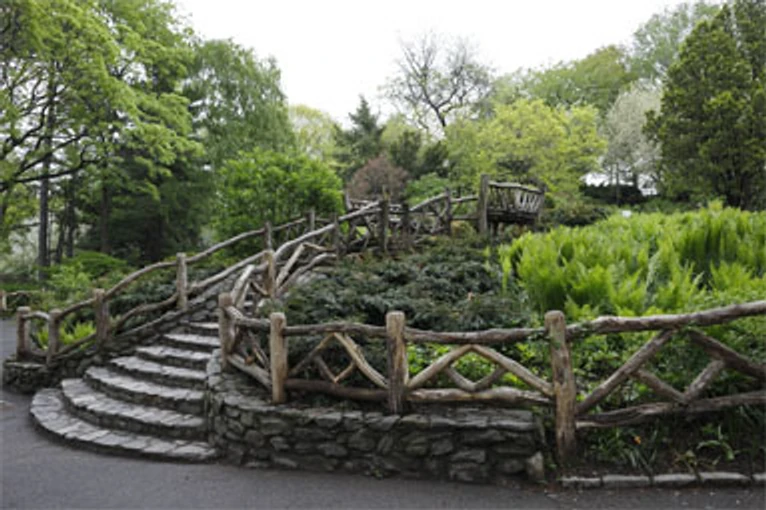
Created in 1913, Shakespeare Garden gathers plants and flowers of the English countryside that appear across Shakespeare’s writing. Rosemary and pansies recall Ophelia, while thistles point to Much Ado About Nothing. A white mulberry adds another literary thread: tradition links it to a tree Shakespeare is said to have planted in 1602.
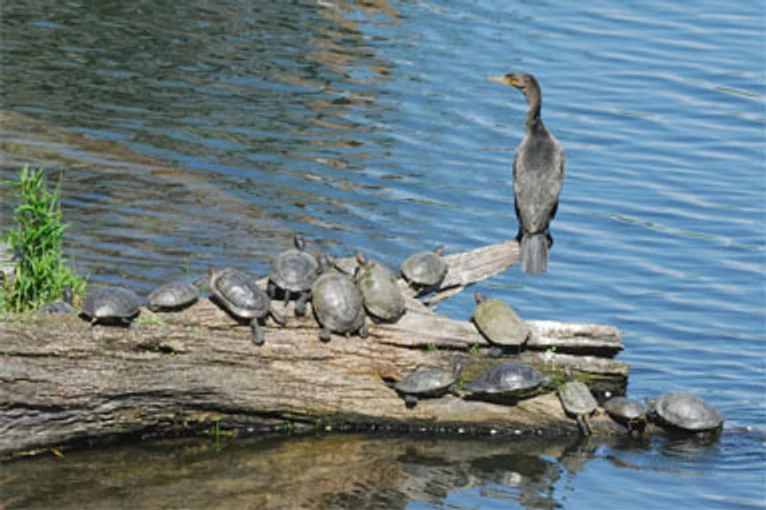
Story 12 of 18
Turtle Pond rests below Belvedere Castle and takes its name from a thriving turtle population. Many arrived after owners released pets here in the 1980s, and the community grew. The pond also preserves a piece of city history: it is the last remnant of the Croton water system, New York’s first steady source of clean water.
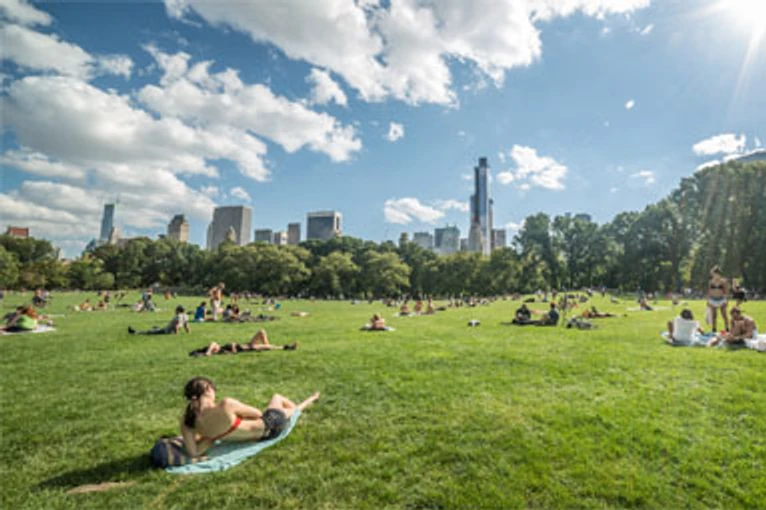
Story 13 of 18
Spanning more than 55 acres, Great Lawn earns its name. On ordinary days it is a place for baseball, picnics and sunbathing; on extraordinary ones it becomes a vast outdoor venue. Concerts by Elton John, Simon & Garfunkel and Diana Ross drew enormous crowds, turning this everyday green into part of New York’s shared cultural memory.
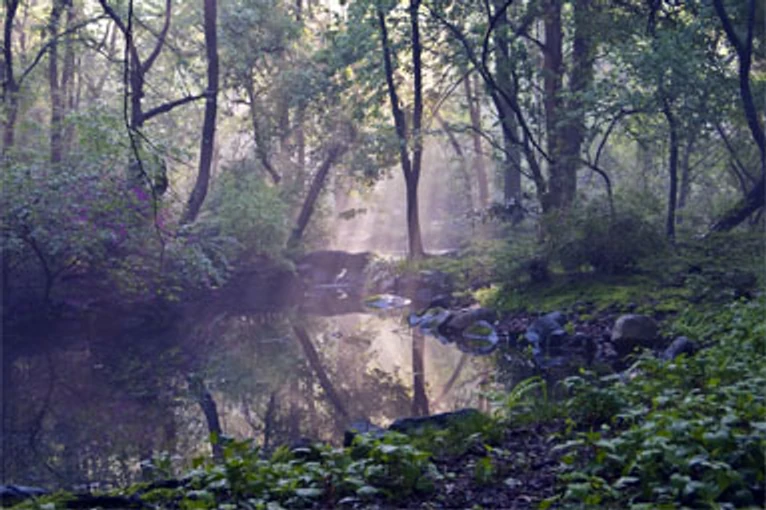
Story 14 of 18
Azalea Pond draws bird watchers with its gentle stream, tall trees and sheltered setting. Century-old azaleas add vivid seasonal color to the surrounding green. The landscape was shaped to recall the rugged Adirondacks, so the area feels less like a formal city park and more like a small woodland discovered by chance in the middle of Manhattan.
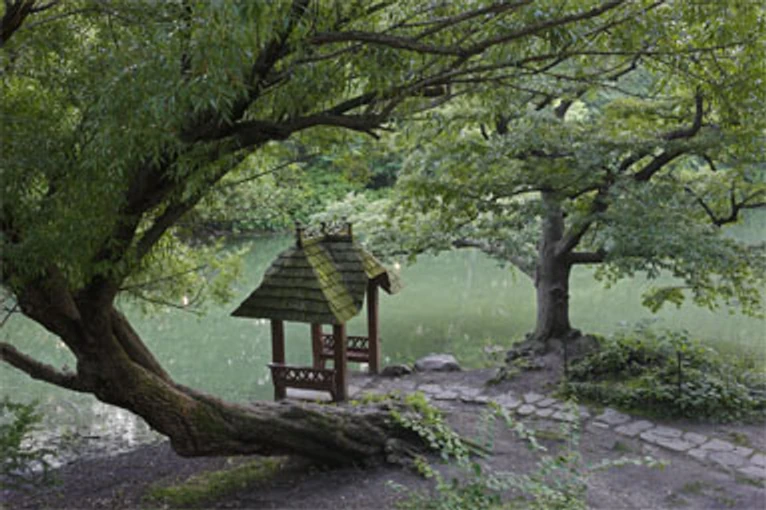
Story 15 of 18
Wagner Cove is an easy place to miss and a rewarding place to find. Tucked beside the lake, it offers a quiet retreat for a date, lunch or a few minutes away from the city’s pace. The rustic shelter has also become a sought-after wedding setting, especially in fall when the surrounding leaves turn red and gold.
Story 16 of 18
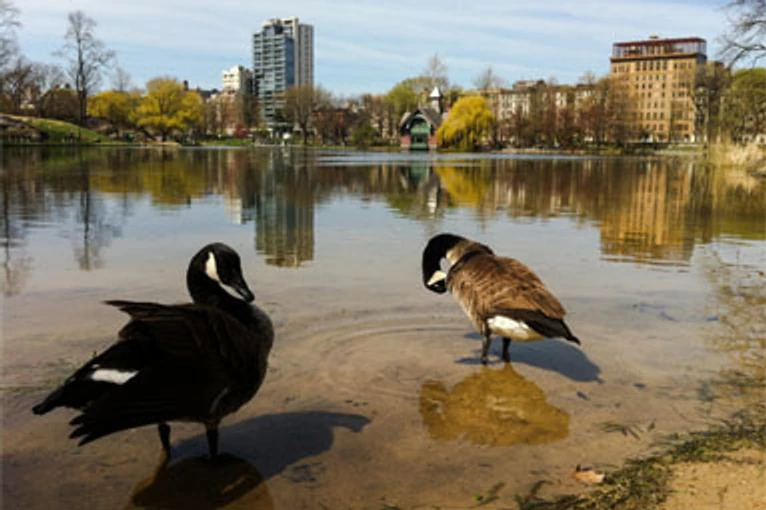
Harlem Meer remembers the historic village of Harlem, settled by Europeans in the 17th century; “meer” is Dutch for lake. Today the water anchors a lively wildlife habitat at the park’s northern edge. Its changing shoreline invites fishing, watching birds and simply slowing down, with a character that feels distinct from the formal landscapes farther south.
Story 17 of 18
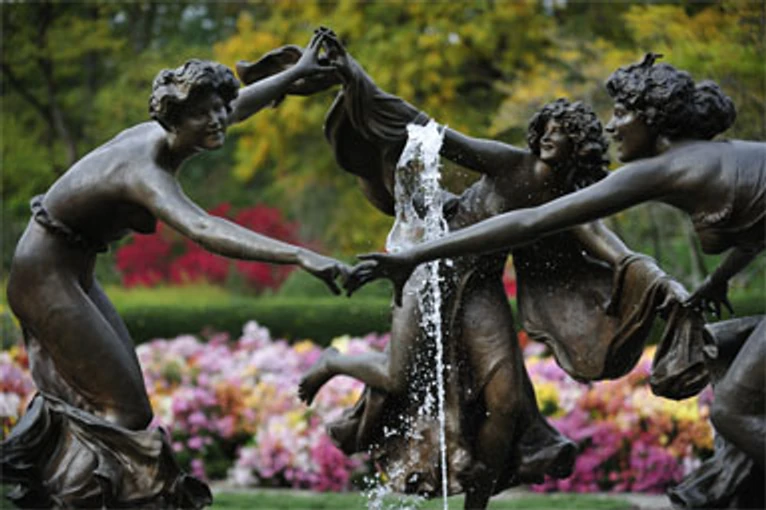
Untermyer Fountain came to Central Park after lawyer and civic leader Samuel Untermyer died in 1940. The bronze group, Three Dancing Maidens, is a cast connected to a fountain in Berlin and once stood at Untermyer’s estate. Its circular movement and raised basin now form the centerpiece of the French garden within Conservatory Gardens.
Story 18 of 18
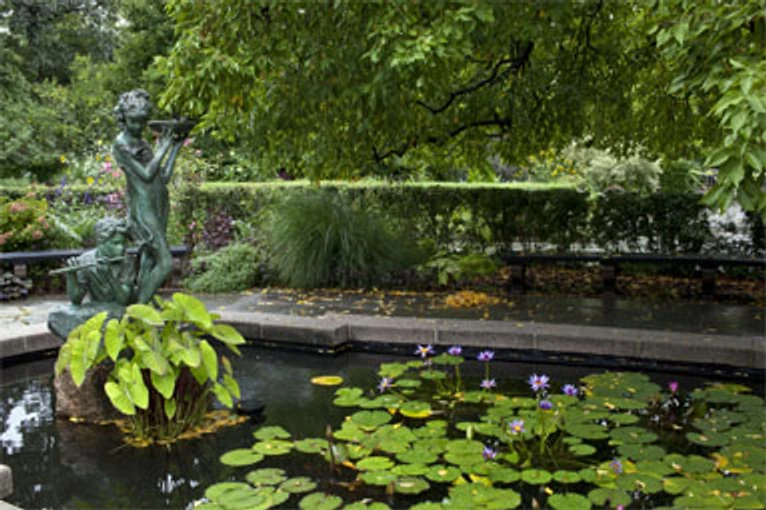
Burnett Fountain honors author Frances Hodgson Burnett in the English garden at Conservatory Gardens. The sculpture brings Mary and Dickon from The Secret Garden into the landscape: Dickon plays his flute while Mary watches the birds. It is a gentle memorial that connects a beloved children’s story with a real garden designed for wandering and discovery.
Typical route rhythm
Stops and order flex with the day. Riding time and transitions sit between these approximate pauses.
1hCovers the lower-loop highlights.
2hCovers most of the full source list.
3hCovers all 35 park highlights.
Pedicab FAQ
Choose one hour for highlights and lower-loop coverage, two hours for broader loop coverage, or three hours for a full unhurried route.
Choose one hour for Central Park highlights and lower-Loop coverage. Check the booking flow for exact stops.
Choose two hours for broader Loop coverage. Check the booking flow for exact stops.
Choose three hours for the full unhurried route. Check the booking flow for exact stops.
Up to three people, including children.
Why book direct
The operational details that remove guesswork before your park day.
Rider receipts
4.83,500+ Google reviews
“Someone who actually cared about our family — not just making a sale.”
“A beautiful experience. It was very easy to book, and the store is in a convenient location and easy to find.”
“Staff were very helpful, rates were reasonable, and the whole experience was smooth and simple.”
Contact the team
Send your date, group size and preferred experience when relevant. Use WhatsApp for faster booking assistance.
Central Park Discovery is the largest operator of Central Park tours. With more than 10 years of experience we guarantee complete and memorable experience of Central Park!

We are Trip Advisor Certificate of Excellence winner, the award celebrating excellent customer experience and given only to companies that consistently achieve great traveler reviews.
We endeavour to further improve ourselves through constant training,research and listening to valuable feedback of our customers.

We are industry partners with Guides Association of New York City, one of the oldest and most trusted tour guides associations in America, and take all required steps to ensure highest quality experiences of NYC city visitors.
We ensure that every member of our team has deep knowledge and passion for New York that they can efficiently transfer to the visitors. By choosing Central Park Discovery you are choosing tour experience backed up by generations of New York City guides.

We are participants of Best for NYC Challenge and do all our best to to improve job quality, give back to communities, and protect the environment across all New York.
We do business with New York City in mind – everything we do also contributes to the city, locals, visitors – that’s the place we want to improve and prosper.